
July 7, 2026: When The Kitchen Becomes Lifeline Infrastructure
What Sudan’s Community Kitchens Teach Us for the Future of Foreign Aid
Asaad Taha, PhD, MBA
Principal Advisor, S4F.Solutions
Google Data Center Community AI Fellow
[email protected]
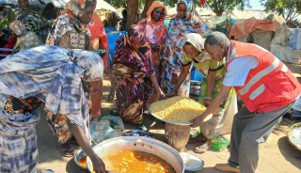
In the midst of Sudan’s civil war, something extraordinary has happened. A network of local volunteers has generated an infrastructure of community kitchens that is helping to feed a devastated populace. A community kitchen is not simply a place to cook. It is lifeline infrastructure.
Across besieged neighborhoods, displacement routes, and shattered urban communities, Sudanese volunteers have organized Emergency Response Rooms, response rooms, takaya, informal clinics, water support, and protection networks. They have done this through WhatsApp groups, youth committees, women’s networks, professional associations, hometown and village networks, diaspora transfers, and the stubborn knowledge of people who still know one another’s names. When formal systems could not reach people fast enough, people built systems from what remained: relationships.
Emergency Response Rooms coordinate food, health support, water, information, referrals, and protection. Response rooms can be a looser term for local groups coordinating around a place, need, or function. Takaya are community kitchens rooted in Sudanese traditions of hospitality and collective care.
Many of the people behind these efforts are young volunteers, women organizers, students, recent graduates, professionals, health workers, and civic activists. Some came through the neighborhood committees, professional networks, student bodies, and civic spaces that helped shape Sudan’s 2018 and 2019 revolution. These were not passive communities waiting to be discovered by aid agencies. They already knew how to organize under pressure, share information, mobilize trust, and act when formal systems were absent, slow, or distrusted.
They did not wait for market tests, calls for proposals, funding cycles, or emergency approvals from distant headquarters. They moved with a speed formal systems often struggle to understand, because it came from cultural fluency, contextual judgment, and trust earned inside the community. They were socially legitimate and operationally capable, but not easily fundable through donor rules built around registration, legal status, banking systems, and conventional compliance.
The Sudanese diaspora is part of that system. Official data put personal remittances to Sudan at about $1.5 billion in 2022, but anyone who knows Sudan knows that number only tells part of the story. Sanctions, banking restrictions, costly transfer fees, and distrust of formal channels pushed many Sudanese to move money through informal networks that official statistics rarely count. Since April 2023, support has moved through family transfers, village committees, professional associations, medical networks, and informal giving from Sudanese communities across GCC countries, Europe, the United Kingdom, Ireland, North America, and elsewhere.
But money alone does not become relief. A transfer from Riyadh, London, Dublin, Doha, or Virginia becomes food, medicine, transport, or shelter only when it passes through trusted local relationships. Someone knows which kitchen is still operating, which road is open, who needs insulin and other life saving medicines, and who can be trusted with funds. The lifeline is often global, but the kitchen must be local.
Local does not have to mean family, and family does not always mean blood. It may mean the person who hosted you, the former classmate who sends money, the neighbor willing to care for your sick child, or the village committee that still counts you when the state does not.
The lifeline is often global, but the kitchen must be local.
This is the main lesson of the community kitchens: Aid often speaks of community resilience, then designs for isolated individuals, household heads, or narrowly defined beneficiary categories. Yet in many relational and family centered societies, survival runs through extended families, neighbors, non-biological kin, host communities, village ties, social networks, and reciprocal obligation.
In places like Sudan, relational architecture is resilience.
Sudan’s needs are far beyond what community kitchens can carry alone. In 2026, humanitarian agencies estimate that 33.7 million people will need assistance. Nearly 9 million people are internally displaced. Almost 19.5 million faced high levels of acute food insecurity in early 2026, including about 135,000 in IPC Catastrophe conditions, while 825,000 children under five are expected to suffer severe acute malnutrition. These figures describe a national humanitarian emergency, not a service gap that volunteer kitchens can close. Many kitchens have already reduced operations or closed under the combined pressure of exhausted community and diaspora support, rising costs, the 2025 U.S. aid freeze and USAID cuts, and threats to volunteers whom both the Sudanese Armed Forces and the Rapid Support Forces have, in different areas, treated with suspicion and distrust. Romanticizing volunteerism would be a moral evasion. No community initiative can substitute for a ceasefire, protection of civilians, humanitarian access, functioning health systems, rule of law, accountability, and an end to impunity.
But foreign aid working through local initiatives can accomplish ends that neither can accomplish alone. The question is not whether foreign aid should support such systems. It is how to support them without weakening what makes them work.
A practical first step would be to create a Sudanese-led Community Response Support Window for trusted local networks, community structures, and other locally recognized initiatives. It should begin with ecosystem and relationship mapping: which networks are trusted in which places, which markets and clinics still function, how diaspora support already moves, what visibility may endanger, and where aid could add value or do harm.
The support should be practical, but also human: food, fuel, water, communications, transport, safety, local verification, financial support for those carrying the work, and psychosocial care for people who have lived in crisis mode for months or years. That support should be transparent, locally appropriate, and proportionate to the time, risk, and responsibility involved. It should protect what makes these networks work: trust, local judgment, moral obligation, and the ability to act without waiting for distant permission. It should strengthen civic motivation without turning solidarity, compassion, and community duty into another donor funded project.
The diaspora should be treated as part of the same architecture, not as a side channel. Sudanese communities abroad have helped sustain families, kitchens, clinics, and local initiatives, but sanctions, banking restrictions, compliance fears, exchange barriers, and transfer costs make that work harder, riskier, and more expensive than it should be. A support window should reduce that burden, giving diaspora networks and local responders safer ways to support the communities they know and trust while keeping decisions close to those affected.
Finally, international aid should study these systems seriously before trying to scale or copy them. Sudan is not a template to export, but it is a powerful case of relational resilience: survival organized through trust, obligation, social knowledge, diaspora ties, and community legitimacy. Understanding that requires more than a needs assessment. It requires systems thinking, public health, sociology, behavioral science, social cohesion, political economy, and lived Sudanese knowledge. The lesson is not that communities should carry a national emergency alone. The lesson is that aid must learn how people already survive, then support those systems without exposing, distorting, or replacing them.
To comment on this blog post please email [email protected]
June 23, 2026: From Donor Control to Local Ownership
Brendan Halloran, Independent Researcher and Consultant

The sudden dismantling of USAID in 2025 marked an inflection point in the broader landscape of global development assistance. In a multi-polar world of shrinking aid, country ownership and leadership from recipient countries will be a stronger feature of aid arrangements than in the past. However, ‘country ownership’ is not straightforward. National government priorities are not always responsive to the needs of the public, instead often reflecting the political economy of dominant national interests.
Is it possible to balance diverse priorities and incentives between donors, national governments, broader public constituencies, and other stakeholders? This blog post suggests a future direction for international assistance by discussing one case that uses a “country platform” approach.
Country platforms bring together governments of developed and developing countries in negotiation around priorities, strategies, and coherent support packages. This represents a potentially significant shift towards a more balanced and effective approach to development challenges, in which the recipient country is in the driver’s seat
In 2022, a set of donor countries (led by the US and Japan), private sector actors, and the government of Indonesia negotiated a commitment of over $20 billion to finance a jointly-agreed plan to accelerate the country’s transition away from coal power, even though much of the coal-based energy infrastructure was relatively new. This process was part of the Just Energy Transition Partnership (JETP) that had kicked off with an agreement with South Africa the year before, and includes subsequent agreements with Senegal and Vietnam.
The JETPs facilitate coordination between government ministries, donors and other development actors to mobilize diverse financing and direct it towards a pipeline of strategic projects, while strengthening the policy and enabling environment to align with strategic goals.
In the case of Indonesia, the JETP enabled a degree of convergence around an ambitious goal of an accelerated transition to renewable energy. Donors and private sector investors contributed more resources than had been on the table, and for Japan this may entail a loss on some of their previous investments in coal power plants in the country. Meanwhile, Indonesia agreed to transition away from coal more quickly that it would have otherwise done.
The JETPs in Indonesia and elsewhere entail numerous tensions and implementation challenges, including the withdrawal of US support in 2025. Furthermore, it remains to be seen which Indonesian stakeholders will be relative winners or losers depending on how the transition from coal to renewables plays out across regions, sectors, and populations, and thus how “just” the “just transition” will be. Nevertheless, the negotiation of a country platform that goes beyond business-as-usual to really move the needle on climate change mitigation while balancing diverse interests is notable.
Country platforms could be utilized more widely to align diverse priorities and incentives for development assistance and country ownership going forward. The focus and nature of country platforms reflect negotiations around mutual interests, yet platforms could also incorporate mechanisms of inclusive participation and accountability to the broader public, strengthening their ability to ensure equitable benefits. Country platforms in other sectors, such as the Global Financing Facility focused on strengthening country health systems, including an increasingly robust mechanism for supporting civil society, demonstrate broader applicability of the approach.
Country platforms can be leveraged to ensure that the efforts of diverse development assistance actors contribute to systemic change, rather than continuing the silos and fragmentation that have characterized much of the global development landscape. This aligns with long-standing commitments to shift towards locally-led development, but donors have still been slow to shift their modalities. A changing global landscape for development assistance could shift this calculus.
Emerging lessons from the JETPs and other country platforms suggest the challenges to advancing effective climate change policies, actions and outcomes – like development more broadly – are not simply financial or technical. Technically sound and well-financed reforms can fail due to misalignment with real-world political economy dynamics. Thus, building inclusive, sustained coalitions for reform remains a critical enabler of success. Collective actors – international and national – could shape country platforms to include stronger and more inclusive participation and accountability mechanisms, broadening and deepening ownership and outcomes.
Platforms are not a silver bullet. Past and current experiences show that donors cannot just “buy” political will with a big enough financial carrot; country platforms must be used to negotiate, build coalitions, and strengthen the governance and implementation mechanisms needed for success. Taking on board these lessons, country platforms could leverage the resources and contributions of international institutions and foreign aid to support inclusive and locally-responsive country leadership, priorities, and systems. In other words, a balanced approach to country ownership in a changing global context.
June 9, 2026: Fund Equitable Communities
Patti Petesch, Independent researcher

What does equitable change look like on the ground—especially when donors and beneficiaries have different definitions of equity? At the JHU Center on Global Poverty’s recent conference on foreign aid, Yuen Yuen Ang offered both hope and warning, suggesting that today’s disruptions may open space for more inclusive and accountable systems, but only if we reckon with forces that keep inequity firmly in place.
Ang primarily addressed equity between countries: whether developing countries have a voice in how foreign aid is used. But there is also equity within countries. As a field researcher on poverty and social norms, and a contributor to four global qualitative studies for the World Bank and CGIAR, I have seen again and again how patriarchal rules and unaccountable authorities reproduce inequity at the grassroots. A question for the future of foreign aid is how to nurture equity at multiple levels.
I propose doing so by focusing on the positive outliers, the communities that break the pattern.
In the large field studies I was involved with, a handful of communities stood out for effective public investments, active markets, rapid poverty reduction, and broad-based empowerment. One of our studies, the CGIAR’s GENNOVATE initiative on gender norms and smallholder agriculture, looked closely at these outliers, and its findings feel especially relevant in this moment of global flux and shrinking development budgets.
To identify the outliers, the study drew on ratings provided from participatory ladder exercises across 79 communities in 17 countries. In each study community, two focus groups estimated their local poverty level now and a decade ago; and two additional focus groups estimated local women’s and men’s power and freedom to take consequential decisions now and a decade ago. In most communities, the news was mixed: at least one of the focus groups estimated moderate, static, or downward mobility on one measure or another.
But eight cases stood apart. In these eight communities every single focus group, 32 in total, estimated at least 20 percent (and often much more) of their community’s households had escaped poverty over the last ten years, and most local men and women had significantly increased decision-making power. These eight communities registered significantly good change on both poverty and empowerment measures.
Drawing on our extensive comparative field data, we found that the outlier communities did share material advantages: better public services and infrastructure, stronger markets, and substantial male labor migration; and they resided in middle-income countries, suggesting a relatively favorable macro environment is necessary. These communities included two each in India (Rajasthan and Uttar Pradesh) and Uzbekistan, and one each in Mexico, Nigeria, Nepal, and Vietnam. But material factors alone did not explain their success. We had other communities with these same characteristics, but their uneven ladder findings suggested uneven benefits from their prosperity. What really set the outlier communities apart was a more inclusionary local normative climate—especially around gender. In these communities, study participants spoke positively about women working for pay, moving more freely, stepping into leadership, delaying marriage, and innovating with their livelihoods.
And that is only half the story. Men in these same communities also described major gains in wellbeing and freedom. Men too benefited from more equitable norms: they could be more open and relaxed about valuing their wives’ earnings and advice and sharing care work and household responsibilities. That is a striking contrast with many men’s testimonies elsewhere that belittled empowered women or disparaged men who did not maintain control of their household.
The study was not designed to determine what produces more egalitarian norms, but it does suggest that egalitarian norms exist in developing countries, and that norms can change in a very short span of time. The outlier cases suggest that when multiple norms loosen simultaneously—and when women and men alike help drive that change—the benefits can spread widely across a community.
This has important implications for development practice. Many aid programs try to change gender norms. A few of these initiatives show promise with advancing more cooperative gender relations and women’s economic empowerment; but many reviews of norms interventions report that most of these initiatives show limited evidence of effectiveness. This matters given longstanding reports of gender projects derailing and leaving women more vulnerable. Moreover, trying to impose Western gender norms reproduces exactly the problem of between-country inequity that we are trying to escape.
Does that mean we must abandon our commitments to gender equity in order to “decolonize” aid? I suggest that a new approach is possible, one that still reflects our values and commitments to equity without imposing them on others. I suggest we experiment with supporting communities already moving independently toward more equitable change. While not completely abandoning the effort to build more inclusive communities, we should use the more constricted foreign aid dollars available to us in this new climate to support and learn from communities that are making progress on equity on their own.
May 12, 2026: Introduction to the Blog
Monica Prasad, Johns Hopkins University
As rallying cries for a new international economic order go, “Sometimes there’s a lot of elephant poop” is unusual, but Lant Pritchett has a point. He was speaking at the Johns Hopkins Center on Global Poverty’s “Future of Foreign Aid” event on May 5, 2026, a gathering of development practitioners and scholars from universities and think tanks. Some highlights from the day-long discussion before an audience of around 300:
“Development is not just aid, and aid is not just money.”
Paul Miller’s summary of the case for optimism. Speakers discussed the reasons for thinking that the contraction of foreign aid does not necessarily mean that poverty will increase in developing countries. Shanta Devarajan gave a capsule history of foreign aid and explored the idea that a shrunken aid world can still provide “knowledge assistance” to citizens to strengthen the accountability of politicians to the public. Or as Caren Grown pithily summarized it: country ownership is not just government ownership. We can still help populations keep their governments focused on the task of development.
“Aid is about helping the donors more than the beneficiaries.”
Yuen Yuen Ang argued that we should not mourn the collapse of foreign aid, because the foreign aid infrastructure was built on hierarchy, and always functioned in the interests of the donors more than the beneficiaries. Similar points were made by Steve Radelet, Shannon Hader, and others, who noted that humanitarian assistance is only one of the rationales for foreign aid, the others being national security interests and commercial interests of the donor country. As George Ingram noted, aid has always been soft power. Ang argued moreover that the academic fixation on randomized controlled trials has helped to create jobs for academics, but has prevented the development of a broader conversation on development, such as on how different countries have developed different growth engines. Developing that broader conversation is the mission of the JHU Center on Global Poverty.
“Developed countries can learn from developing countries.”
Pursuing this theme, Kizito Byenkya mentioned the community aid kitchens in Sudan, a locally-led innovation built on indigenous concepts and found to be cost-effective, and discussed bringing such knowledge to developed countries. We will have a more detailed blog post on the aid kitchens in the coming weeks, as well as on difficult discussions that were broached but not concluded by Byenkya as well as by Kathy Guernsey, Deepti Samant, and others, such as: what happens when locally-led initiatives conflict with inclusive philosophies? Who gets to decide?
“There’s a lot of elephant poop.”
Pritchett was suggesting that the actually existing aid infrastructure, the organizations on the ground, develop operational, cultural, and technical expertise about how things get done that is invaluable for the work of development. (Susana Cordeiro Guerra gave detailed pictures of life from the inside of one such organization.) Pritchett suggested a metaphor of a bird standing on the back of an elephant. The bird is the academic work of scholars. The elephant is the community of hard-working practitioners and organizations that over decades has been the actual site where the effort to solve global poverty is being made. Not everything goes well, there is hierarchy and inequality, but you need the work of the elephant and the knowledge of practitioners. Development organizations know a lot.
“We’re still here.”
Laura Adams’s defiance, on behalf of all the aid practitioners whose lives were upended last year, and who have done their best to continue their work in other contexts, often at considerable cost to themselves. Echoing Byenkya, Adams noted that some in the aid community are bringing what they have learned back to the U.S., underlining that poverty exists in the developed world as well. Putra Kusdarman, Isabelle Ick, and Sara Nitz Nolan gave the audience a picture of the trauma the aid community has experienced and the resilience they have had to develop. This is the community that has the experience and the commitment to help us rethink how we do aid—the underappreciated elephants–and we invite contributions from current and former aid practitioners.
What Does an Egalitarian Aid Regime Look Like?
With thanks to all the speakers and the moderators (including Shareen Joshi and Carsyn Baxter), the organizing committee, and our student helpers, we now turn to the task of taking the conversations from last week forward. One day was not enough to explore the sometimes implicit tensions and debates between the speakers. Over the summer we will be inviting a series of blog posts on the hard questions, particularly the problem that the things donors like are not always the things that beneficiaries like.
- Donors want accountability, and beneficiaries want flexibility.
- Donors want gender equality, LGBTQ rights, accessibility, but are often working in contexts where these are not priorities.
- Beneficiaries do not speak as one. Who should donors listen to when beneficiaries do not agree?
- Does privileging beneficiaries’ perspectives mean less emphasis on corruption and governance and human rights? More emphasis on religious beliefs?
We invite perspectives of all kinds, including defenses of the current aid regime, on these and other questions. How do we prevent the next backlash? What does development look like beyond aid, and what are the obligations of the developed countries? What kinds of research can support the goals of the new aid infrastructure? How do we get beyond RCTs?
We particularly welcome posts that seek not just to critique, but also to construct an alternative world. The series of posts will run through the summer of 2026 and will be archived on this page. Please email [email protected] to contribute.


