
The development of open-source tools is an important focus for the SMART team. Such tools require integration to support orchestrated error characterization and error management, in addition to benchmarking to showcase their efficacy.
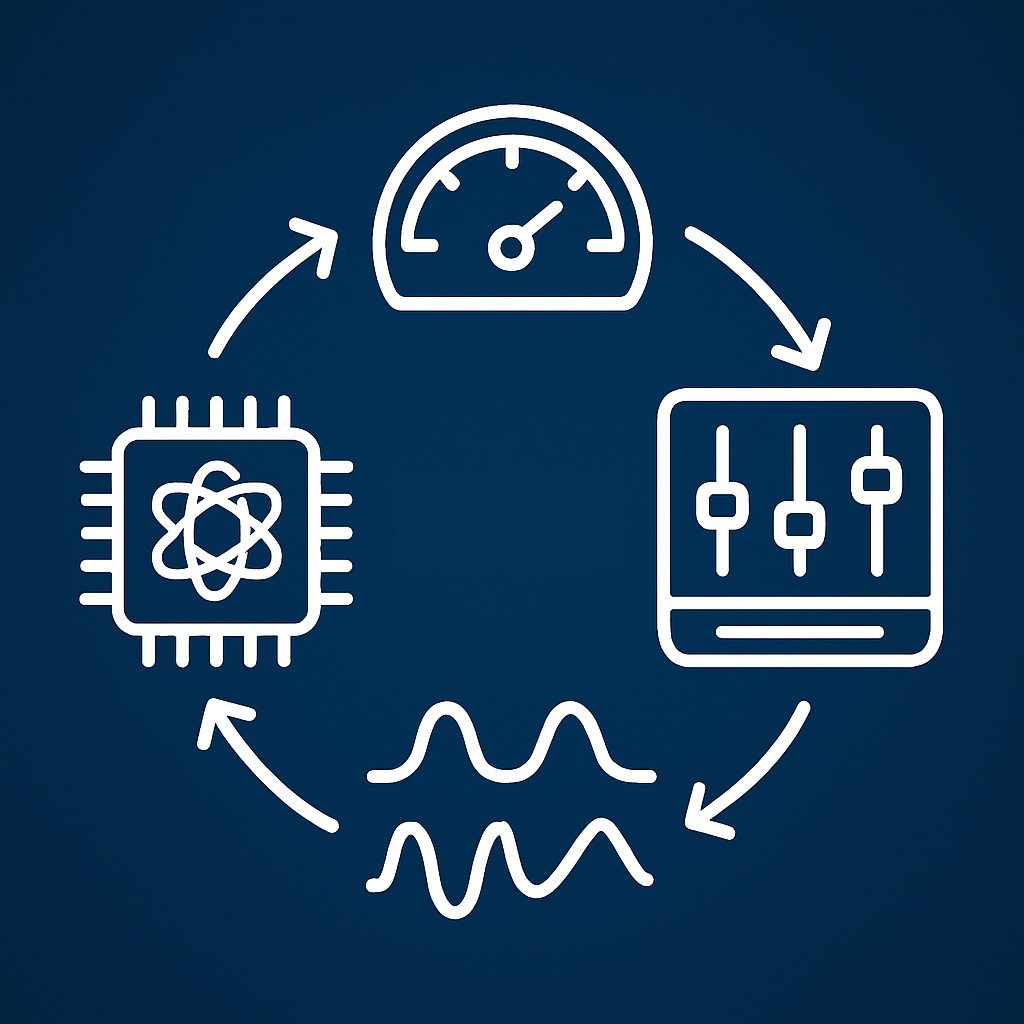
Integration of Characterization and Error Management Protocols
SMART integration is driven by the insight that treating physical parameters as first-class inputs to the compiler can significantly enhance efficiency and improve the quality of program outputs. This approach enables dynamic feedback loops between estimated physical parameters—such as noise profiles—and experimental results, allowing compilers to better adapt to real-time hardware conditions. As a result, quantum algorithms can be compiled more effectively within the constraints of current hardware. These adaptive feedback mechanisms pave the way for running larger and more complex quantum algorithms on noisy devices, ultimately accelerating the pace of quantum computing research and development.

Demonstrating Advantage of Error Management
Quantum hardware demonstrations are a critical part of displaying the utility of an error management protocol. The SMART team is keen on exhibiting the developed protocols, principles, and software tools on modern quantum processors available via the DOE Testbed Program and cloud-based systems. In particular, the team targets demonstrations in which a SMART error resilient quantum software stack could facilitate quantum advantage in high-impact scientific problems.